
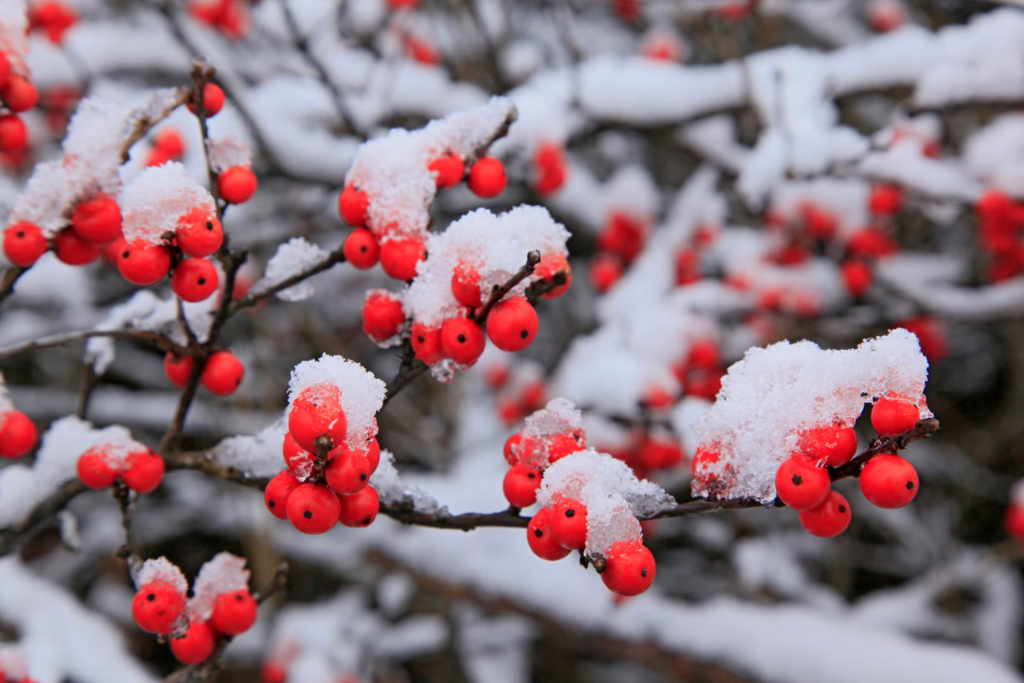
Winterberry Holly: The East Coast Native Plant That Feeds Birds When Nothing Else Will
Most native plant conversations focus on spring and summer blooms, which means the coldest months of the year get almost no attention. Winterberry Holly, Ilex verticillata, fixes that gap entirely. Native to wetlands, woodland edges, and stream banks throughout the eastern United States from Maine down through the Southeast, this deciduous holly does something almost no other East Coast native does this well. It drops its leaves in fall and holds onto brilliant red berries straight through winter, turning bare branches into a genuine lifeline for birds during the exact season when natural food is hardest to find.
Winterberry earns its keep ecologically in a way that goes beyond decoration. Additionally, those berries are a critical food source for eastern bluebirds, robins, cedar waxwings, and dozens of other overwintering and migrating species, often persisting on the branch well into late winter after other food sources have been picked clean. Furthermore, because Winterberry is dioecious, meaning individual plants are either male or female, you need at least one male plant near several females to get the berry production birds depend on. This is a detail most big box garden centers never mention, and it is the single most common reason people plant Winterberry and never see a single berry. Get the male-to-female ratio right and you have planted one of the most reliable winter bird magnets available anywhere on the East Coast.
Winterberry is also genuinely well suited to the conditions many East Coast yards actually have. It tolerates wet, poorly drained soil that kills most ornamental shrubs outright, making it an excellent choice for that perpetually soggy corner of the yard that nothing else seems to survive. However, it does need consistent moisture and will struggle in dry, sandy conditions without supplemental watering during establishment. Plant it in fall or early spring, keep the soil moist through the first year, and be patient. Winterberry takes two to three years to reach significant berry production, but once established it becomes a dependable, low-maintenance native shrub that turns the bleakest months of the year into a genuine wildlife event right outside your window.